Bed Sheets That Fit a Busy Laundry Week
Choose everyday bed sheets by mattress fit, feel and laundry routine, with practical tradeoffs for households that wash bedding often.
Our guidance is based on published information and household scenarios, rather than hands-on product testing. Some links may earn a commission when an affiliate relationship applies. Read our disclosure.

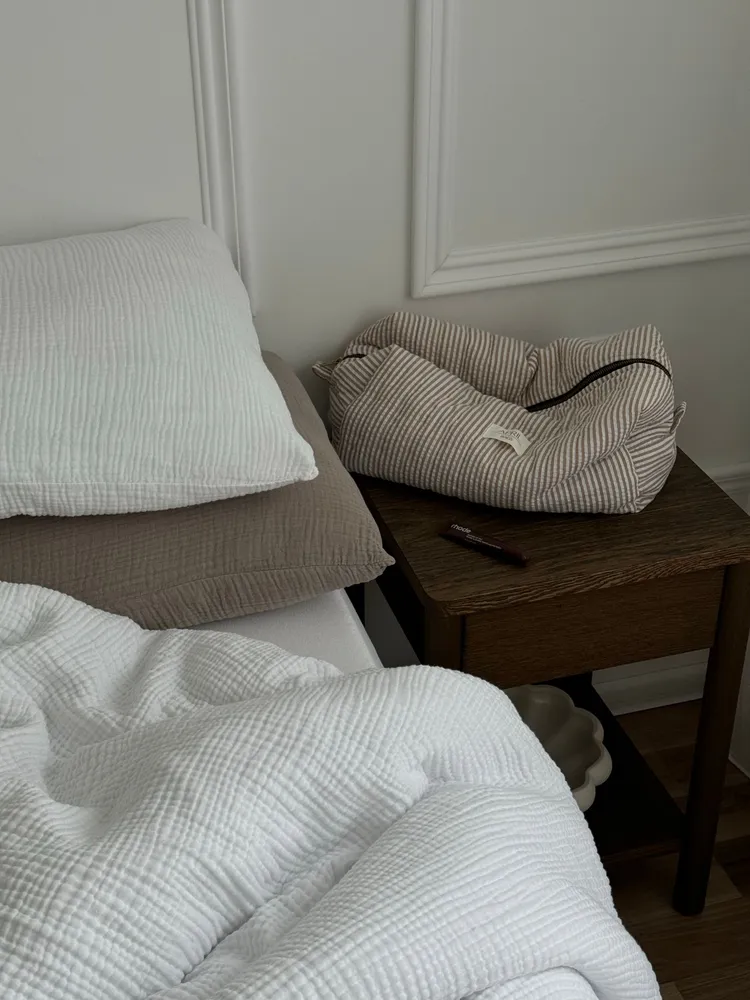
Lifestyle photography by Andrea Davis / Pexels. The photograph illustrates a home setting; it does not identify a reviewed product.
A Sunday evening sheet change becomes awkward when the only clean fitted sheet barely reaches the last corner. Add a mattress topper, a late dryer cycle and a household that needs the bed ready now, and beautiful bedding stops being the main concern. For a busy laundry week, a good sheet purchase begins with how the set fits, dries and returns to the bed.
In this guide
Measure the complete bed, including the topper
Measure mattress depth with the topper and protector in place. Compare that combined depth with the fitted sheet information rather than assuming that a queen label settles the question. Also check the flat sheet and pillowcase dimensions; different sets can package different pieces under the same size name. A generously sized fitted pocket can help, but extra fabric should still stay tucked without bunching around the sides.
Take a photo of the mattress label and keep the measurements in your phone. If one sleeper pulls the flat sheet across the bed, check its width against the actual mattress and the amount of tuck you prefer. Buying the right size solves a practical problem that a higher thread count cannot fix. Avoid purchasing a replacement until you know which part of the existing set fails.
Choose texture before chasing a number
Percale and sateen describe weave choices, while cotton and linen describe fibers. Those are useful starting points, but they do not promise the same feel from every manufacturer. Read the product's material breakdown and care label, then use a sample or an in-store display when possible. Consider whether you like a crisp surface or a smoother drape and whether visible wrinkles bother you.
A wrinkle-prone fabric can still be a sensible choice if you happily fold it straight from the dryer. A fabric that needs extra finishing may be frustrating if bedding usually waits in a basket. Do not let a thread-count headline stand in for your own preference, the fabric composition or the retailer's specific wash instructions.
Build a two-set rotation that actually works
Keep one set on the bed and another clean and complete in the linen cupboard. Store each set with its pillowcases so a change does not turn into a search across several shelves. If laundry capacity is limited, avoid buying a heavy matching blanket at the same time. First establish a dependable sheet rotation, then decide whether the top layer really needs replacing.
A spare does not have to match perfectly. It should fit the same mattress and tolerate the routine you can maintain. Check that dark and light pieces can be washed as directed without creating a separate, inconvenient load. A sale bundle loses its appeal when one special-care component makes the whole set difficult to use.
Know when to buy separate pieces
If the fitted sheet is worn but the flat sheet and pillowcases are comfortable, replace the fitted sheet alone. Sets can be convenient, yet they are not automatically the lowest-cost path for every household. Compare the pieces included with the pieces you actually use. A household that sleeps without a flat sheet may prefer individually purchased fitted sheets and pillowcases.
Give new bedding a careful check before discarding the packaging. Confirm the size, seams and any missing pieces, and read the return conditions before washing. Launder according to the care label before normal use. If the corners still pull off, revisit the pocket depth and topper combination rather than buying another set with the same dimensions.
Check the basket before checking out
Compare the delivered cost of a set with buying the pieces separately. Include shipping and any additional pillowcases that the package leaves out. If a set includes two cases but you use four pillows, the headline offer does not describe your complete purchase. Also check whether the retailer lists the fabric and care instructions for every included piece.
Keep the first order narrow: one correctly sized set or the worn piece that needs replacing. Once it has been checked and cared for as directed, decide whether it belongs in the regular rotation. Buying several identical sets before confirming fit can multiply an avoidable mistake. A comfortable, complete set that returns reliably from laundry is a stronger purchase than a large bundle that stays on the shelf.
Compare your options
| Option | Best fit | Tradeoff |
|---|---|---|
| Cotton percale set | A crisp surface and a straightforward bedding rotation | Wrinkles may remain visible |
| Cotton sateen set | Readers who prefer a smoother drape | Feel varies with construction and finishing |
| Separate fitted sheet and cases | Replacing only worn pieces | Colors may not match older bedding |
Where to browse
Use these retailer collections to compare dimensions, materials, care instructions and current prices. These are ordinary retailer links unless an active affiliate arrangement is disclosed. We do not control availability, shipping or returns.
Questions before you buy
How many sheet sets should a household keep?
Two complete sets per regularly used bed are a useful starting point. Add another only if laundry timing or frequent guest changes make two impractical; storage space also matters.
Should I buy the deepest pocket available?
Match the stated pocket guidance to your complete mattress stack. An unnecessarily loose sheet may bunch, so depth is a fit decision rather than a quality ranking.
Sources & further reading
Sources checked October 8, 2026. Practical suggestions reflect editorial judgment; always follow the instructions supplied with your own product.