
A Cleaning Cloth System That Does Not Take Over a Drawer
Set up a manageable cloth rotation by task, drying space and laundry habits instead of buying an oversized bundle of identical cleaning towels.
Our guidance is based on published information and household scenarios, rather than hands-on product testing. Some links may earn a commission when an affiliate relationship applies. Read our disclosure.
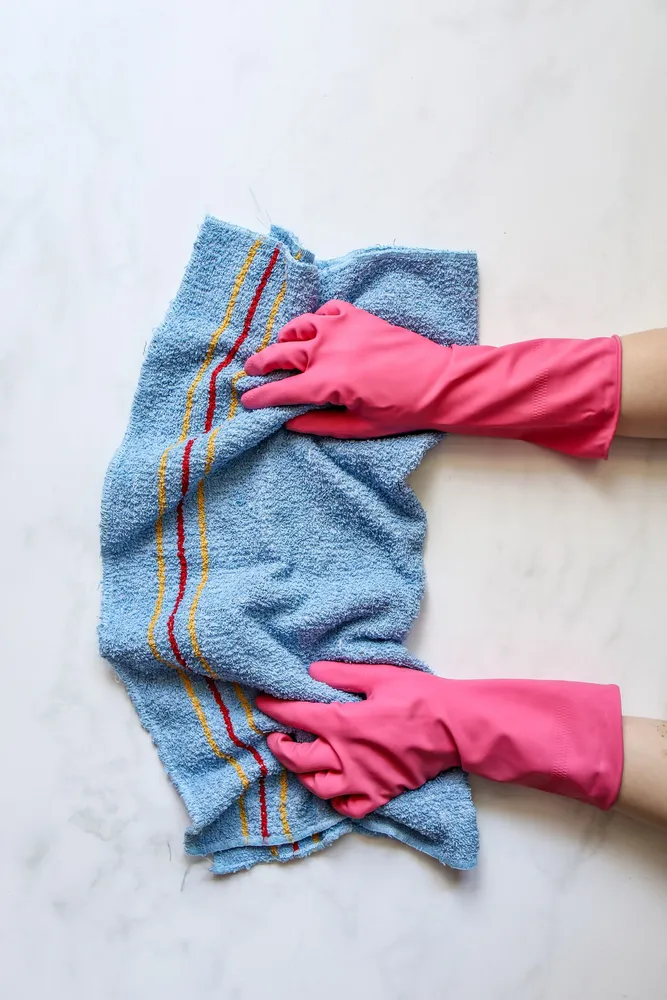
Lifestyle photography by Polina Tankilevitch / Pexels. The photograph illustrates a home setting; it does not identify a reviewed product.
The clean cloth drawer should make a task easy to start. Instead, many households find a tangled pile with no clear way to tell bathroom cloths from the ones used on the dining table. A small rotation solves more than another discounted bundle. It gives each group a role, connects used cloths to a washing routine and leaves enough room that someone else can find the right textile without asking.
In this guide
Count jobs before counting cloths
The familiar bargain pack can turn one missing cloth into a drawer containing thirty nearly identical ones. Start with a normal week instead. You may wipe kitchen counters daily, clean bathroom fixtures twice and dust one room at the weekend. Assign enough cloths for those tasks between washes, then include a small spare. A home that launders cleaning textiles frequently needs fewer than one that waits until Sunday. Counting a real cycle gives you a useful quantity without building a textile stockpile.
Make separation obvious to everyone
Choose a simple distinction that your household can remember: one color for bathroom surfaces and another for general cleaning, for example. Write the rule on the inside of the storage drawer if several people help. Color alone is not a guarantee of hygiene; the cloth still needs appropriate washing and handling. It does make accidental task switching less likely. Store used cloths apart from fresh ones, and give damp cloths a way to dry rather than dropping them into a sealed heap.
Look at weave, edges and handling
A thick plush cloth may feel appealing but can be awkward around taps or take longer to dry. A flatter cloth folds neatly and reaches narrow edges, while a dedicated glass cloth may suit the finish you are trying to clean. Check the fabric care instructions and inspect the edge construction before buying a large set. Avoid assuming that every microfiber cloth works identically on every surface. Follow the surface manufacturer’s instructions where scratching, finish damage or residue would be costly.
Treat washing as part of the purchase
A washable tool only saves effort if its washing requirements fit your household. Keep the care label or product instructions, especially when different cloth types need different handling. Check whether the recommended temperature and drying method match the loads you already run. Wash heavily soiled items appropriately and avoid using a dirty cloth merely because its designated color is available. Once a cloth loses its usefulness for visible surfaces, clearly reassign it to a lower stakes job rather than letting it wander through every room.
Set a realistic replacement rule
You do not need a fresh bundle because a cloth looks slightly less new. Replace a cloth when damage, persistent contamination or performance makes it unsuitable for its assigned job. Keep a modest inventory and check it during a monthly drawer tidy. If several cloths are untouched, reduce the next purchase. If the clean stack repeatedly disappears before laundry day, add only the number needed to close that gap. A useful system responds to evidence from your routine rather than to the largest package discount.
Before you place an order
Look beyond the number of cloths in the package. Compare usable dimensions, texture and care directions, then calculate how many you need between washes. A smaller pack with recognizable task colors may be more useful than a larger bundle whose cloths all look alike. If you already own suitable textiles, supplement the gap rather than replace the whole collection for visual coordination. Check whether any specialist cloth makes specific surface claims and read those directions closely. Keep one modest reserve until you understand wear and washing frequency. The sensible first purchase is enough to complete your real rotation, with room left in the drawer to separate clean and used items clearly.
- Care instructions compatible with existing laundry
- Distinct colors or easily recognized labels
- A weave appropriate to the cleaning task
- A pack size based on one washing cycle
Try it during an ordinary week
Try a simple weekly count before replacing anything: note how many fresh cloths the kitchen uses, how many bathroom tasks need their own textiles and when those items return clean. If the drawer empties on Thursday, add a modest reserve or move the washing day; do not jump to a much larger pack automatically. Keep a separate marked place for retired cloths assigned to appropriate rough utility jobs. When several people clean, explain the task separation once and place the fresh groups visibly. An understandable system is more durable than one that relies on perfectly folded stacks.
Compare your options
| Option | Best fit | Tradeoff |
|---|---|---|
| Small color coded pack | Shared household routines | Colors need a consistent rule |
| Dedicated glass cloth | Mirrors and compatible glass | Another care instruction to remember |
| Cotton cleaning rag | Repurposing suitable old textiles | Texture and lint vary by fabric |
Where to browse
Use these retailer collections to compare dimensions, materials, care instructions and current prices. These are ordinary retailer links unless an active affiliate arrangement is disclosed. We do not control availability, shipping or returns.
Questions before you buy
Can one cloth clean the entire home?
Use separate clean cloths for different tasks, especially kitchen and bathroom work, and change cloths when they become soiled.
Does microfiber disinfect a surface?
A cloth is a cleaning tool. Any disinfectant claim depends on the approved product and its directions, not the fabric color or texture.
Sources & further reading
Sources checked October 8, 2026. Practical suggestions reflect editorial judgment; always follow the instructions supplied with your own product.